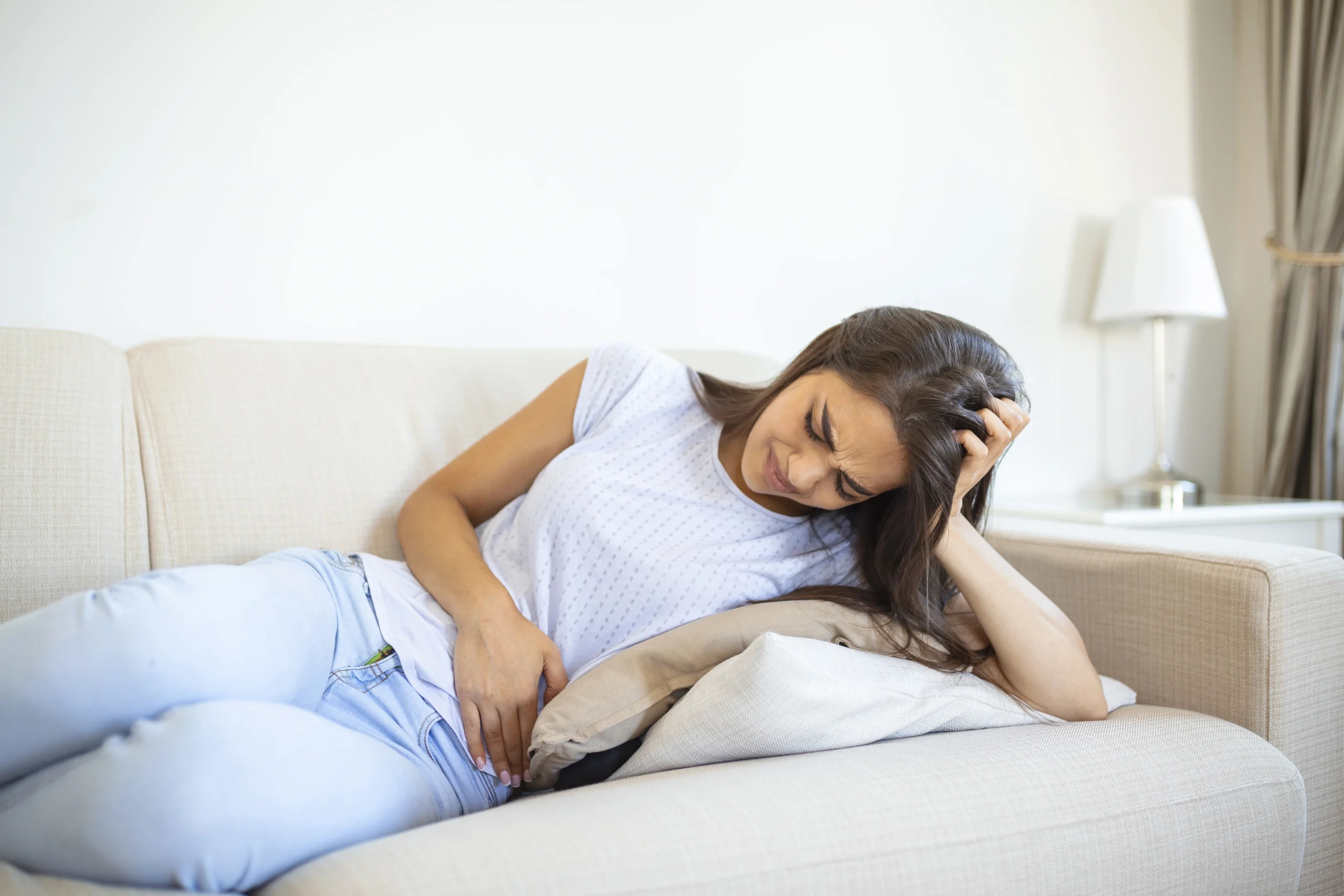
Pain During Periods: Normal Cramps or a Sign of Endometriosis?
For many women in India, pain during periods is simply part of the calendar. A few days of discomfort, some paracetamol, a hot water bottle — and then back to life. But for a significant number of women, the pain is far beyond manageable. It disrupts work, cancels plans, and quietly chips away at quality of life — month after month, year after year.
The question that rarely gets asked is: how much pain is actually normal?
The answer matters more than most women realise, because period pain that crosses a certain threshold can be one of the first signs of endometriosis — a chronic condition that affects approximately 42 million women in India and remains widely undiagnosed.
What Are Normal Period Cramps?
Medically, period cramps are called dysmenorrhea — and they are extremely common. During menstruation, the uterus contracts to shed its lining. These contractions can cause cramping that is entirely normal and expected.
Normal period pain typically looks like this:
- Mild to moderate cramping in the lower abdomen
- Pain that begins 1–2 days before bleeding and eases within 2–3 days
- Discomfort that responds to over-the-counter pain relief (ibuprofen, mefenamic acid)
- Pain that does not significantly interfere with daily activities
- No worsening pattern — the intensity stays roughly the same cycle to cycle
Normal cramps are caused by prostaglandins — natural chemicals that trigger uterine contractions. Younger women and teenagers tend to experience more intense cramping, which often improves with age or after pregnancy.
If your pain fits this picture, it is most likely primary dysmenorrhea — painful periods without an underlying medical cause.
When Period Pain Is Not Normal
Here is where it gets critical, and where many women — and unfortunately, some doctors — get it wrong: severe, worsening, or disabling period pain is not normal, and it is not something to push through.
Pain that falls into the following category deserves medical evaluation:
- Cramping so severe it requires you to miss work, school, or daily activities
- Pain that is worsening cycle to cycle rather than staying consistent
- Pelvic pain that does not stop when your period ends — pain that lingers throughout the month
- Pain during or after sexual intercourse (dyspareunia)
- Pain during bowel movements or urination, especially around your period
- Heavy periods with large clots or bleeding that soaks through a pad or tampon in under an hour
- Bloating, nausea, or fatigue that seems disproportionate to normal periods
This pattern — particularly the combination of severe cramping, pelvic pain outside of periods, and pain during sex — is a classic presentation of endometriosis.
What Is Endometriosis?
Endometriosis is a chronic gynaecological condition in which tissue similar to the uterine lining grows outside the uterus — on the ovaries, fallopian tubes, pelvic lining, and in some cases the bowel or bladder. Every month, this tissue responds to hormonal signals the same way the uterine lining does: it thickens, breaks down — but has nowhere to go. The result is inflammation, scarring, and adhesions (bands of fibrous tissue that can cause organs to stick together).
This cyclical inflammation is what drives the pain — and because it is happening outside the uterus, it does not behave like typical period pain. It is deeper, broader, and does not resolve when bleeding stops.
Endometriosis Symptoms to Know
The most common endometriosis symptoms include:
- Severe dysmenorrhea — cramping that is significantly worse than what pain medication can manage
- Chronic pelvic pain — dull, aching pain in the lower abdomen that persists between cycles
- Painful intercourse — deep pain during or after sex, especially in certain positions
- Painful bowel movements or urination during periods
- Heavy or irregular bleeding — sometimes with large clots
- Bloating — sometimes called "endo belly," disproportionate abdominal swelling
- Fatigue — overwhelming tiredness that feels unrelated to activity
- Difficulty conceiving — endometriosis is one of the leading causes of infertility in women
It is important to note that pain severity does not always match disease severity. Some women with extensive endometriosis have mild symptoms; others with minimal disease have debilitating pain. This is one reason diagnosis is so frequently delayed.
Period Pain vs Endometriosis: A Quick Comparison
| Feature |
Normal Period Cramps |
Endometriosis |
| When pain starts |
1–2 days before period |
Before, during, and between periods |
| Pain location |
Lower abdomen |
Abdomen, pelvis, back, legs |
| Response to painkillers |
Usually effective |
Often inadequate |
| Pain during sex |
No |
Common |
| Pain during bowel movements |
No |
Common around period |
| Worsens over time |
No |
Yes, progressive |
| Impact on daily life |
Mild to moderate |
Significant disruption |
| Associated with infertility |
No |
Yes |
Endometriosis in India: A Delayed Diagnosis Crisis
Endometriosis in India is vastly underdiagnosed. According to the ICMR-National Institute for Research in Reproductive and Child Health, approximately 42 million Indian women are affected — representing nearly 25% of the global burden. Despite this, the average time to diagnosis in India is 7 to 10 years from the onset of symptoms.
The reason is not a lack of women seeking help — it is the normalisation of period pain. Women are routinely told that severe cramps are just part of being a woman. Painkillers are prescribed. The conversation ends. Years pass.
This delay has real consequences: endometriosis is a progressive condition. The longer it goes untreated, the more scarring, adhesions, and damage accumulate — and the harder it becomes to manage, including for fertility.
How Is Endometriosis Diagnosed?
Endometriosis cannot be diagnosed through a standard blood test or basic ultrasound alone. A proper evaluation includes:
- Detailed symptom history — a thorough discussion of your pain pattern, cycle, and associated symptoms
- Pelvic examination — to check for tenderness, nodules, or organ displacement
- Transvaginal ultrasound — can detect endometriomas (ovarian cysts caused by endometriosis), though it may miss superficial lesions
- MRI — provides more detailed imaging of deep infiltrating endometriosis
- Laparoscopy — the gold standard for definitive diagnosis; a minimally invasive surgical procedure that allows direct visualisation and biopsy of endometrial tissue
Endometriosis and Fertility
One of the most significant concerns with delayed diagnosis is its impact on endometriosis and fertility. The condition can damage the ovaries, block the fallopian tubes, and create an inflammatory environment that affects egg quality and implantation. It is estimated that 30–50% of women with endometriosis experience some degree of fertility challenge.
Early diagnosis and appropriate management — whether hormonal, surgical, or through assisted reproduction — can meaningfully improve outcomes. If you are trying to conceive and suspect endometriosis, do not wait. An early fertility assessment changes the trajectory. Explore fertility consultation at Dr. Shernaz's clinic if you have concerns.
When to See a Gynaecologist
See a specialist if you experience any of the following:
- Period pain that regularly prevents you from functioning normally
- Pain that has worsened over the last 3–6 months
- Pelvic pain outside of your period
- Pain during sex or bowel movements
- Heavy bleeding with large clots
- Difficulty conceiving after 6–12 months of trying
You deserve more than being told to manage with painkillers. A proper evaluation by a gynaecologist can distinguish normal period cramps from endometriosis — and give you a clear path forward.
Dr. Shernaz Damkevala (Dastur) provides comprehensive gynaecological care including assessment and management of painful periods and endometriosis at her clinic in Malad West, Mumbai. If PCOS is also a concern alongside period pain, learn about PCOS/PMOS management here.
📍 P4, Ahura Nursing Home, Chunilal Giridharilal Marg, Malad West, Mumbai – 400064 📞 Book an Appointment
Also explore: Maternity Care | Fertility Services | Neonatal Care
FAQs
Q1. How do I know if my period pain is normal?
A: Normal cramps are mild to moderate, begin just before your period, ease within 2–3 days, and respond to standard painkillers. Pain that is severe, worsening, or disrupts daily life is not normal and needs evaluation.
Q2. What does endometriosis pain feel like?
A: It often feels like deep, severe cramping that extends to the lower back or legs, continues outside the period, and may include pain during sex or bowel movements. It typically does not respond well to standard pain relief.
Q3. Can endometriosis be detected on an ultrasound?
A: A transvaginal ultrasound can detect endometriomas (cysts on the ovaries) but may miss other lesions. An MRI or laparoscopy is needed for a more complete picture.
Q4. Is endometriosis common in India?
A: Yes. Approximately 42 million women in India are estimated to have endometriosis — nearly 1 in 10 women of reproductive age. India carries about 25% of the global burden of the condition.
Q5. How long does endometriosis take to diagnose in India?
A: On average, 7 to 10 years from the onset of symptoms — largely because severe period pain is frequently dismissed as normal.
Q6. Can endometriosis affect fertility?
A: Yes. It is one of the leading causes of infertility in women. Early diagnosis and treatment significantly improve fertility outcomes.
Q7. What is the treatment for endometriosis?
A: Treatment depends on severity and goals (pain relief vs. fertility). Options include hormonal medications (oral contraceptives, progestins), pain management, and surgery (laparoscopy to remove lesions). There is currently no cure, but symptoms can be effectively managed.
Q8. At what age does endometriosis typically start?
A: It can begin from the first menstrual period (menarche), typically in adolescence or early 20s, and persists through menopause.
Q9. Is severe period pain always endometriosis?
A: Not always. Other causes include adenomyosis, fibroids, PCOS/PMOS, or pelvic inflammatory disease. A proper gynaecological evaluation is needed to identify the underlying cause.
Q10. Where can I get evaluated for endometriosis in Malad West, Mumbai?
A: Dr. Shernaz Damkevala (Dastur) offers gynaecological evaluation including assessment for endometriosis at Ahura Nursing Home, P4, Chunilal Giridharilal Marg, Malad West, Mumbai – 400064. Call 9136454451 to book.
CITATIONS & REFERENCES
- World Health Organization — Endometriosis Fact Sheet (updated October 2025) — https://www.who.int/news-room/fact-sheets/detail/endometriosis
- ICMR-NIRRCH — Cited in Neotia Getwel Health: Endometriosis in India: What Every Woman Needs to Know — https://neotiagetwelsiliguri.com/blog-details/endometriosis-in-india-what-every-woman-needs-to-know-about-causes-symptoms-treatment
- India TV News — The pain women keep being told to ignore: Why pelvic pain is not always endometriosis (October 2025) — https://www.indiatvnews.com/health/pelvic-pain-endometriosis-india-2025-2025-10-28-1014720
- Medindia — Endometriosis Is Not Just Period Pain, It Affects The Whole Body (March 2026) — https://www.medindia.net/news/healthwatch/endometriosis-is-not-just-a-pelvic-disease-222866-1.htm
- As-Sanie S et al. — Endometriosis: A Review — JAMA, July 2025 — doi:10.1001/jama.2025.2975
- Simancas-Racines D et al. — Endometriosis as a Systemic and Complex Disease — Int J Mol Sci, January 2026 — doi:10.3390/ijms27020908