
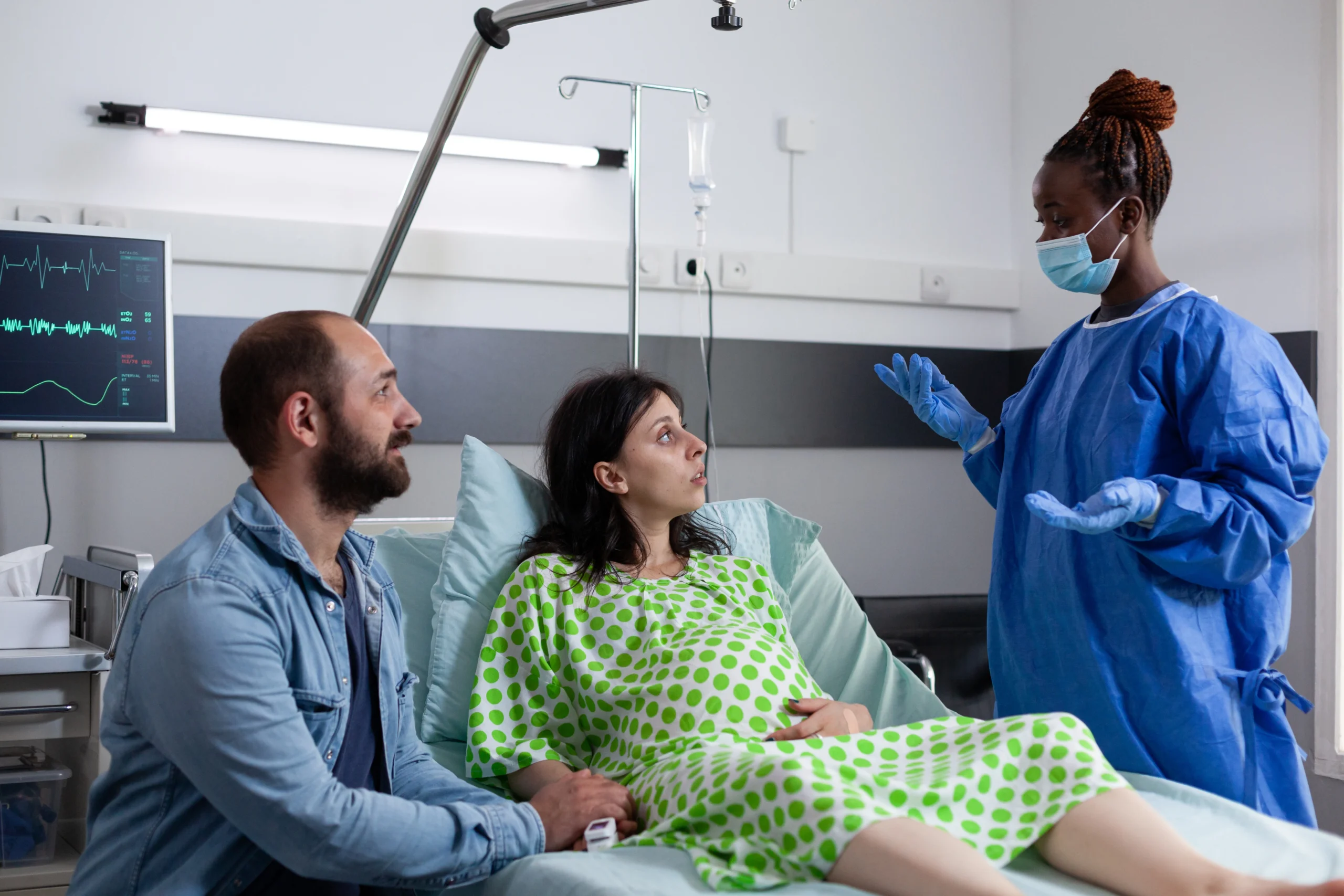
What Is Normal Delivery (Vaginal Delivery)?
Normal delivery, also called vaginal delivery, is the natural process through which a baby is born through the birth canal. The uterus contracts during labour, the cervix gradually dilates, and the baby moves downward and out through the vagina. This is the most common form of childbirth worldwide and is the default recommended method for low-risk pregnancies. Labour can begin naturally or be induced medically, and pain relief options — including epidural anaesthesia — are available.Normal Delivery Benefits
- Faster recovery: Most women are discharged within 1–2 days and return to daily activities within 1–2 weeks
- No surgical risks: No incision, no anaesthesia-related complications, no surgical site infection risk
- Beneficial for baby's lungs: Passage through the birth canal helps clear amniotic fluid from the lungs, reducing breathing difficulties in newborns
- Gut microbiome advantage: Babies born vaginally are exposed to the mother's beneficial bacteria, which supports early immune system development
- Lower cost: Vaginal delivery is significantly less expensive than a C-section in both public and private hospitals
- Hormonal benefits: Natural labour triggers oxytocin release, which supports uterine contraction, milk production, and mother-infant bonding
- Better for future pregnancies: No uterine scar means fewer complications in subsequent pregnancies
Potential Challenges of Normal Delivery
- Labour pain can be prolonged and intense
- Risk of perineal tearing, which may require stitches
- Unpredictable timing — labour may progress slowly or require medical intervention
- In some cases, an emergency C-section may still become necessary
What Is a C-Section (Caesarean Section)?
A C-section delivery is a surgical procedure in which the baby is delivered through an incision made in the mother's abdomen and uterus. It is performed under regional (spinal or epidural) or general anaesthesia and typically takes 45–60 minutes. C-sections can be planned (elective) — scheduled in advance for a known medical reason — or emergency — performed urgently when complications arise during labour.When Is a C-Section Necessary?
A C-section is medically indicated in the following situations:- Breech or transverse position — baby is not head-down near delivery
- Placenta previa — placenta is covering the cervix, blocking the birth canal
- Placental abruption — placenta separates from the uterine wall prematurely
- Fetal distress — significant drop in baby's heart rate during labour
- Multiple pregnancies — twins or higher-order multiples in complex positions
- Obstructed labour — labour fails to progress despite adequate contractions
- Previous uterine surgery — certain types of prior C-sections or uterine procedures
- High-risk pregnancy conditions — severe preeclampsia, active infections, or medical conditions in the mother
C-Section Recovery Time and Risks
C-section recovery time is longer than that of a vaginal birth. Here is what to expect:- Hospital stay: 3–5 days (compared to 1–2 days for normal delivery)
- Return to light activity: 4–6 weeks
- Full recovery: 6–8 weeks
- Restrictions: no heavy lifting, driving, or strenuous activity during recovery
- Surgical site infection
- Excessive bleeding requiring transfusion
- Injury to surrounding organs (bladder, bowel)
- Adverse reaction to anaesthesia
- Blood clots (deep vein thrombosis)
- Increased risk in future pregnancies: Repeated C-sections raise the risk of placenta accreta, uterine rupture, and complications with scar tissue
- Babies born by elective C-section may have a slightly higher risk of transient breathing difficulties in the first few hours
Normal Delivery vs C-Section: Side-by-Side Comparison
| Factor | Normal Delivery | C-Section |
| Procedure | Natural, through birth canal | Surgical incision in abdomen |
| Anaesthesia | Optional (epidural available) | Required (spinal/general) |
| Hospital stay | 1–2 days | 3–5 days |
| Recovery time | 1–2 weeks | 6–8 weeks |
| Surgical risks | None | Infection, bleeding, organ injury |
| Pain during labour | Yes — manageable with options | Minimal during surgery |
| Baby's lung clearance | Natural — better fluid expulsion | Fluid may remain temporarily |
| Baby's microbiome | Advantageous bacterial exposure | Less initial exposure |
| Cost | Lower | Higher |
| Future pregnancies | Fewer complications | Each C-section adds risk |
| Recommended for | Low to moderate risk pregnancies | High-risk or emergency situations |
The C-Section Rate in India: What the Numbers Say
India's C-section rate has risen sharply in recent years. According to National Family Health Survey data, 47.4% of deliveries in private hospitals are now performed by C-section — compared to just 14.3% in public hospitals. Nationally, C-sections account for approximately 27.4% of all births, up from 12% in the early 2000s. The WHO recommends that C-section rates above 10–15% at the population level do not necessarily improve maternal or neonatal outcomes. This does not mean C-sections are bad — it means they should be performed when medically justified, not as a default. If you are being advised a C-section in a planned (elective) context, it is entirely reasonable — and encouraged — to ask your obstetrician for a clear clinical rationale.What About VBAC — Vaginal Birth After C-Section?
If you have had a previous C-section and are planning another pregnancy, a vaginal birth after C-section (VBAC) may be possible for many women, depending on the type of uterine incision and other clinical factors. VBAC is associated with faster recovery and fewer complications than a repeat C-section — but it requires careful evaluation and close monitoring during labour. Discuss this with your obstetrician well in advance of your due date.Which Should You Choose?
The decision between normal delivery vs C-section is not a lifestyle choice — it is a medical one, made in partnership with your obstetrician based on your clinical picture. If your pregnancy is uncomplicated and your baby is well-positioned, a vaginal delivery is almost always the recommended path. If there are medical indications — fetal position, placental problems, maternal health conditions — a C-section is the right intervention. What matters is that you are informed, your concerns are heard, and your delivery plan is built around safety — not convenience or anxiety. Dr. Shernaz Damkevala (Dastur), obstetrician in Malad West, Mumbai, provides personalised maternity care from pre-conception through delivery and beyond. Whether you are navigating a low-risk or high-risk pregnancy, explore maternity care services here. For newborn care after delivery, explore Neonatal Care and NICU services available at the clinic. 📍 P4, Ahura Nursing Home, Chunilal Giridharilal Marg, Malad West, Mumbai – 400064 📞 Book a Maternity Consultation Also read: Gynaecology Services | Fertility CareFAQs
Q1. Is normal delivery safer than C-section?
A: For uncomplicated pregnancies, yes — normal delivery carries fewer surgical risks and offers faster recovery. A C-section is safer when specific medical indications are present.Q2. How long does it take to recover from a C-section?
A: Most women need 6–8 weeks for full recovery. Hospital discharge is typically after 3–5 days, with restrictions on driving and heavy activity for at least 4–6 weeks.Q3. How long does recovery take after normal delivery?
A: Most women recover within 1–2 weeks for uncomplicated vaginal births. Hospital discharge is usually within 1–2 days.Q4. Can I choose to have a C-section without a medical reason?
A: While possible in some private settings, it is not medically recommended without a clinical indication. The risks of surgery, longer recovery, and complications in future pregnancies should be carefully discussed with your obstetrician.Q5. What are the risks of a C-section for the baby?
A: Babies born by elective C-section may have a slightly higher risk of temporary breathing difficulties. They also miss the beneficial bacterial exposure from the birth canal, which plays a role in early immune development.Q6. Does normal delivery affect the baby's brain development?
A: Research does not show any negative effect on brain development from vaginal delivery. In fact, the hormonal process of labour may support neonatal neurological adaptation.Q7. Can I have a normal delivery after a previous C-section?
A: In many cases, yes. A VBAC (Vaginal Birth After C-Section) is possible depending on the type of prior incision, the reason for the previous C-section, and your current pregnancy's specifics. Discuss eligibility with your obstetrician.Q8. Why is the C-section rate so high in private hospitals in India?
A: NFHS-5 data shows 47.4% of private hospital births in India are by C-section. Factors include fear of labour pain, scheduling convenience, financial incentives, and sometimes, inadequate shared decision-making. Informed patients make better decisions — always ask for the clinical reason.Q9. At what stage of pregnancy is the delivery method decided?
A: Ideally discussed in the third trimester (after 32–34 weeks), though a planned C-section may be scheduled as early as 37–39 weeks. Emergency decisions can occur any time during labour.Q10. Where can I discuss my delivery plan in Malad West, Mumbai?
A: Dr. Shernaz Damkevala (Dastur) offers maternity consultations including birth planning at Ahura Nursing Home, P4, Chunilal Giridharilal Marg, Malad West, Mumbai – 400064. Call 9136454451 to book.CITATIONS & REFERENCES
- Observer Research Foundation — The C-Section Surge in India: Uncovering the Impact of Profit on Childbirth (April 2025) — https://www.orfonline.org/expert-speak/the-c-section-surge-in-india-uncovering-the-impact-of-profit-on-childbirth
- National Family Health Survey-5 (NFHS-5), 2019–21 — Government of India / Ministry of Health & Family Welfare
- Apollo Cradle — Normal Delivery vs C-Section: Key Differences Explained — https://www.apollocradle.com/blog/maternity/normal-vs-c-section-delivery
- Nanavati Max Hospital — C-Section vs Normal Delivery: Which One Is Right for You — https://www.nanavatimaxhospital.org/blogs/c-section-vs-normal-delivery
- Mayo Clinic — VBAC: Know the pros and cons (updated 2024–25) — https://www.mayoclinic.org/healthy-lifestyle/labor-and-delivery/in-depth/vbac/art-20044869
- Pandey AK et al. — Alarming Trends of Cesarean Section — Time to Rethink — JMIR Public Health, 2023 — https://www.ncbi.nlm.nih.gov/pmc/articles/PMC9972201/
- Omnicuris — C-section rates in India: Trends and regulatory audits — https://www.omnicuris.com/medshots/daily_updates/india-c-section-rates-four-fold-increase
- World Health Organization — WHO Statement on Caesarean Section Rates — https://www.who.int/reproductivehealth/publications/maternal_perinatal_health/cs-statement/en/